

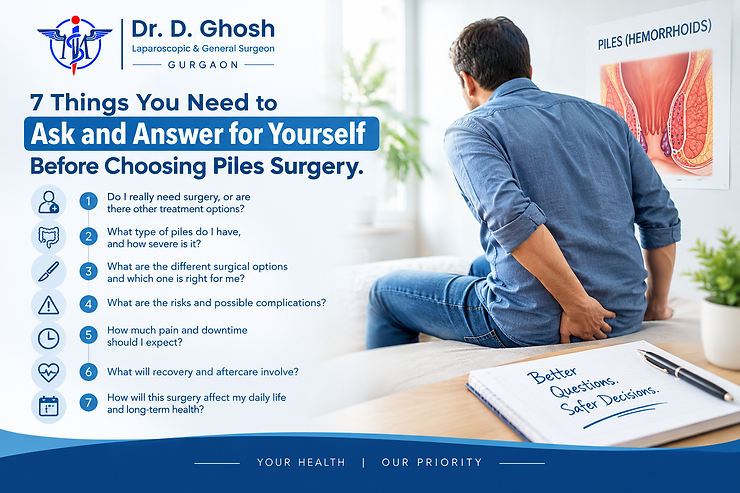
7 Things You Need to Ask and Answer for Yourself Before Choosing Piles Surgery

Living with chronic piles (hemorrhoids)—dealing with persistent pain, bleeding, sitting discomfort, or prolapse—takes a significant toll on your daily quality of life. While modern, minimally invasive procedures like laser surgery offer fast recovery and high precision, jumping into any surgical procedure without clarity can lead to anxiety or unrealistic recovery expectations.
Before making a final decision, ask and answer these 7 critical questions to ensure you are fully prepared, clinically informed, and confident in your treatment path.
1. Have I Obtained an Accurate, Formal Stage/Grade Diagnosis?
Not all piles are the same, and not all grades require surgical intervention:
Grade 1 & 2 Piles: Often respond well to dietary modifications, fiber supplementation, lifestyle adjustments, and conservative medical therapy.
Grade 3 & 4 Piles: Prolapsed tissues that do not reduce easily or cause recurrent bleeding often require definitive procedural intervention.
Key takeaway: Ask your surgeon to clearly explain your exact grade of piles. Surgery should always match the anatomical severity of the condition, not just the frequency of flare-ups.
2. Am I Choosing Surgery to Fix the Root Cause, or Just the Symptoms?
Surgery corrects the anatomical tissue—removing or shrinking the swollen hemorrhoidal cushions. However, surgery cannot change your bowel habits or diet.
If severe chronic constipation, prolonged straining on the toilet, or an inactive lifestyle persist after surgery, new hemorrhoids can develop over time. Ask yourself: Am I ready to fix my daily lifestyle and fiber intake alongside having surgery?
3. Do I Understand the Difference Between Laser and Traditional Procedures?
Modern proctology has evolved significantly beyond traditional open surgery. Understanding your surgical options ensures realistic expectations:
Laser Piles Surgery (LPH / Hemorrhoidoplasty): Minimally invasive, preserves the anal sphincter muscles, causes significantly less post-operative pain, and allows for a rapid return to work (usually within 24 to 48 hours).
Conventional Hemorrhoidectomy: Involves surgical excision, requires a longer healing period, and carries a higher degree of post-operative discomfort.
Ask your specialist which technique is best suited for your specific clinical presentation and why.
4. What Are the Realistic Post-Operative Expectations and Recovery Timelines?
Even with advanced, minimally invasive laser procedures, healing takes time. You must ask yourself and your care team:
How many days of downtime will I need before returning to my desk job or routine activities?
What will bowel movements feel like during the first week?
What pain management and sitz bath routine will I need to follow at home?
Having a clear, realistic picture of the post-operative journey prevents unnecessary panic during the normal healing phase.
5. Have I Fully Addressed the Root Triggers: Constipation and Gut Rhythm?
The single biggest contributor to piles recurrence and post-surgery discomfort is hard, dry stool. Ask yourself:
Am I drinking 2.5 to 3 liters of water daily?
Is my daily diet rich in natural dietary fiber (whole grains, vegetables, fruits)?
Am I spending more than 5 minutes on the toilet or using my phone while seated?
Correcting toilet posture (such as using a footstool) and ensuring soft, effortless bowel movements are non-negotiable prerequisites before and after surgery.
6. What Is My Financial and Insurance Approval Plan?
Administrative stress during hospital admission detracts from your healing focus. Before committing to a date, ensure you have clarity on:
TPA / Cashless Insurance Coverage: Does your health insurance policy cover day-care laser proctology procedures?
Pre-Authorization Formalities: Has your surgeon’s administrative team assisted you with pre-approval paperwork?
Out-of-Pocket Expenses: Are there any non-payable consumables or co-pay clauses you should budget for?
7. Is My Specialist a Trained, Dedicated Proctologist & Laparoscopic Surgeon?
Anorectal care requires delicate muscle preservation and surgical precision. Choosing a specialist who regularly performs advanced laser proctology and laparoscopic surgery ensures accurate sphincter preservation, reduced recurrence risk, and optimal post-operative guidance.
Summary Checklist for Patients
Question to Ask Yourself | What You Need Before Deciding |
Exact Grade Diagnosis | Official clinical grading (Grade 1 to 4) |
Surgical Technique | Clarity on Laser vs. Conventional procedure |
Recovery Expectations | Realistic timeline for pain and daily work resumption |
Insurance / TPA Status | Cashless pre-approval status confirmed |
Lifestyle Preparedness | High-fiber diet plan and hydration regimen ready |
Need Clear, Ethical Guidance on Piles Treatment?
If you are struggling with recurring pain, bleeding, or discomfort and want an honest, evidence-based clinical evaluation, our specialist team
📍 Sector 8, Sector 43, Sector 84, Gurugram
📞 Call for Clinical Evaluation: +91 8527700181 / +91 70230 02775 or send us your reports and earlier consultations on WhatsAPP. We will call you back to arrange for a second opinion by the specialist.
ℹ️ Cashless TPA insurance guidance and administrative support available.


Comments